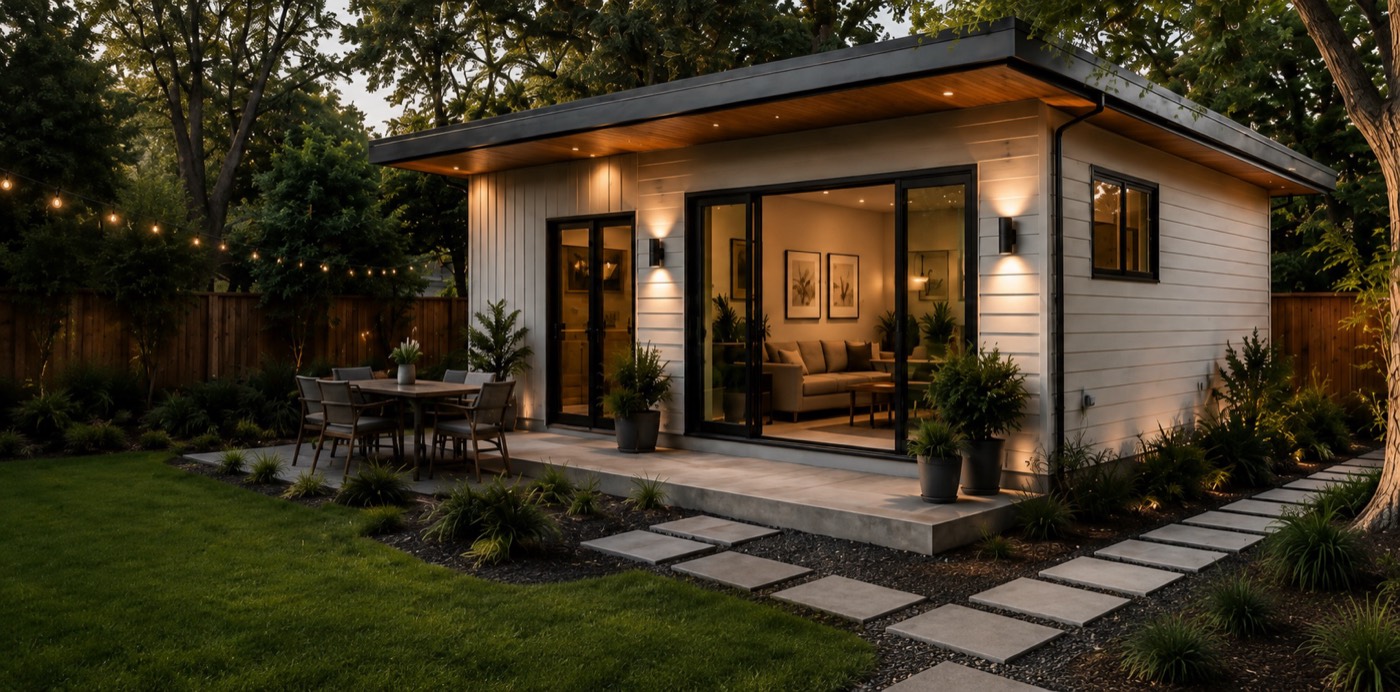
Local & Trusted ADU Builders
Connect with vetted ADU builders and suppliers in the Austin area.
Know the Austin ADU Rules
Navigate Austin's ADU regulations, permits, and zoning with confidence.
Local Austin ADU Solutions
Local knowledge. Local professionals. Local solutions.
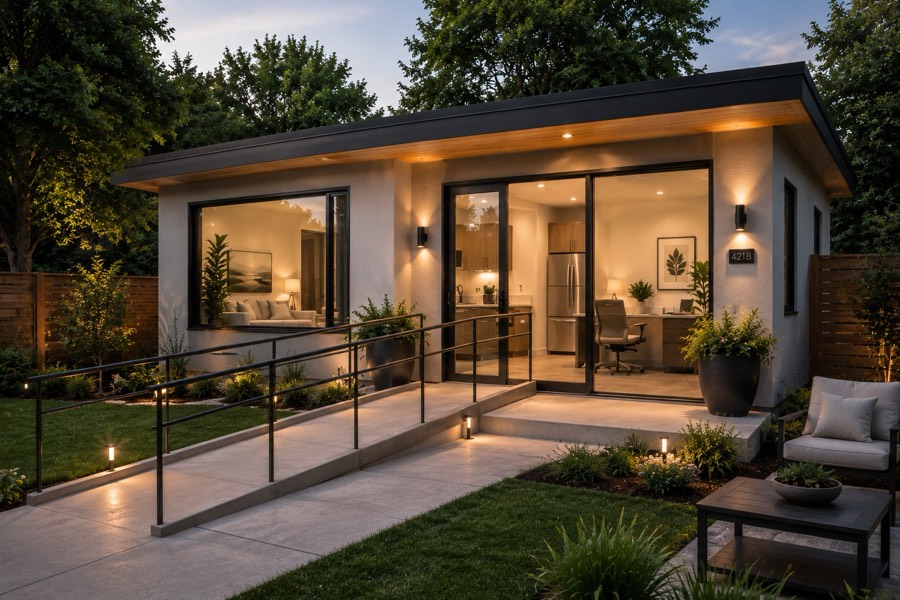
ADUs for Every Lifestyle
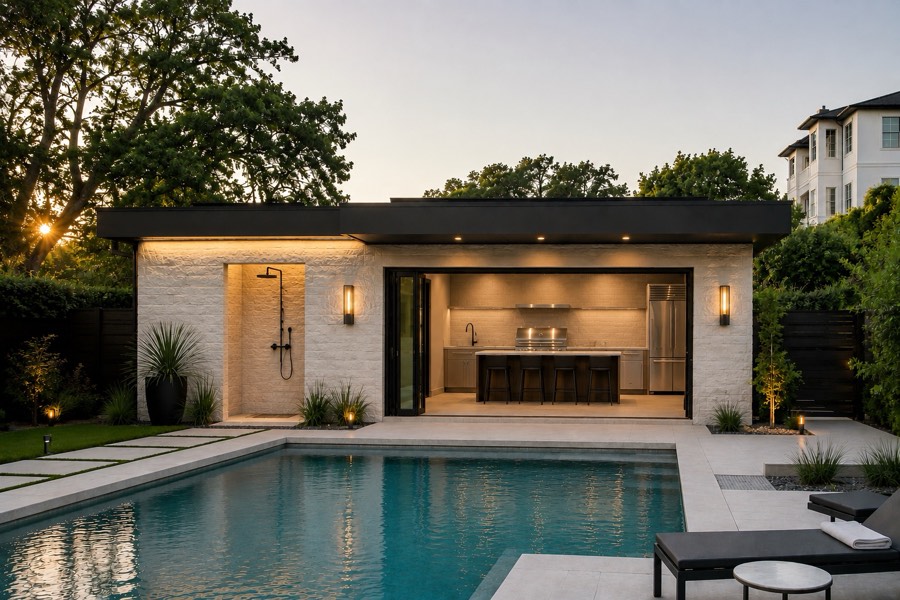
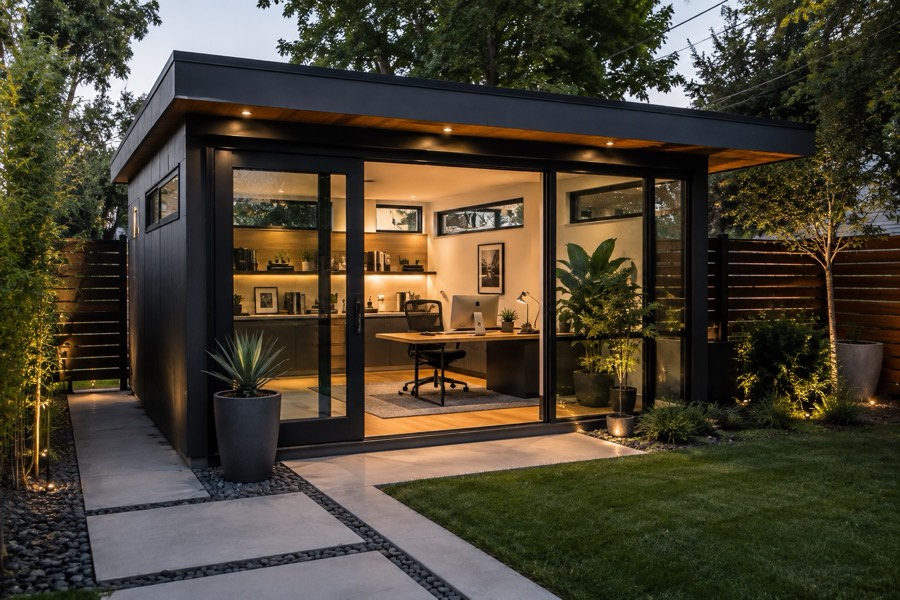
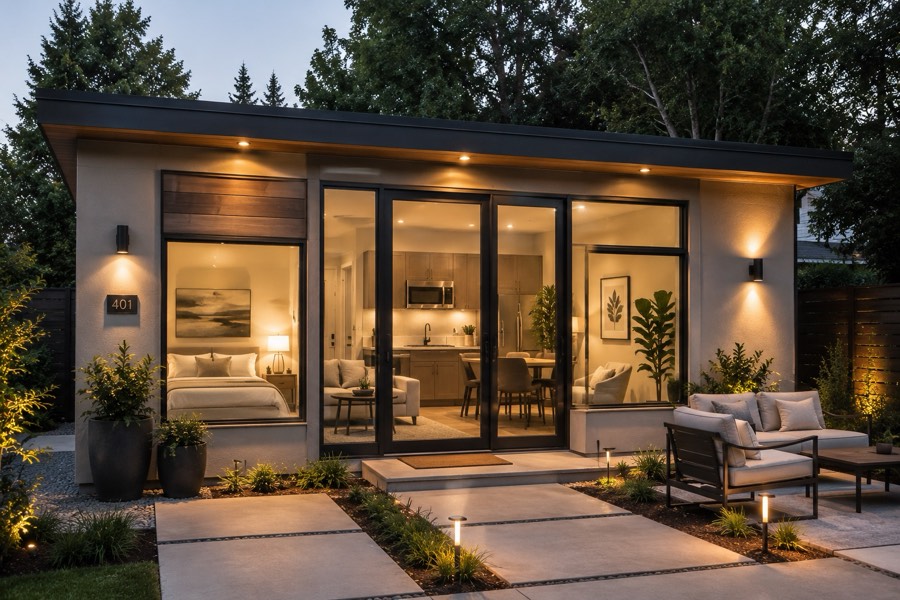
Are You an Austin ADU Builder or Supplier?
Get listed in front of Austin homeowners actively planning their ADU project.
Get Listed as a Trusted ProFrequently Asked Questions
Am I allowed to build an ADU on my property in Austin, TX?
Yes. In most Austin residential zones (SF-1, SF-2, and SF-3), the HOME Initiative allows up to three housing units per single-family lot. Eligibility depends on lot size (typically 5,750+ sq. ft. for standard ADU provisions), private deed restrictions, HOA covenants, and site constraints like protected trees or floodplains.
What are the size and height limits for an ADU in Austin?
Traditional ADU (Subchapter F)
- Size: capped at 1,100 sq. ft. or 15% of total lot area, whichever is smaller
- Second-story area: capped at 550 sq. ft.
- Height: 30 ft maximum, 2 stories maximum
HOME Initiative (2–3 units on an SF-1, SF-2, or SF-3 lot)
Subchapter F is waived entirely for these projects — its size and height rules don't apply. Instead:
- Size: governed by Floor Area Ratio (FAR). Any single new unit is capped at 0.40 FAR or 2,300 sq. ft., whichever is greater. Total project FAR is capped at 0.55 FAR (3,200 sq. ft.) for 2 units, or 0.65 FAR (4,350 sq. ft.) for 3 units. These FAR caps only apply to lots inside the Subchapter F boundary — outside that boundary, there's no FAR restriction.
- Height: follows base zoning (LDC § 25-2-492), which is 35 ft for SF-1, SF-2, and SF-3 lots. No specific maximum number of stories is stated in the ordinance; some three-story configurations are possible within that height depending on design.
Is owner occupancy required to build or rent an ADU in Austin?
No. Austin eliminated the owner-occupancy requirement under the HOME Initiative. Property owners may live in either unit or rent both the primary house and the ADU independently to long-term tenants.
How much does it cost to build an ADU in Austin, Texas?
Average ADU construction costs in Austin range from $50,000 to $150,000 for garage conversions, $130,000 to $260,000 for prefab/modular units, and $175,000 to $400,000+ for ground-up custom builds. Permitting and impact fees add $6,000 to $16,000.
Key Local Cost Factors to Keep in Mind
- Utility Connections & Metering: Austin Water tap and impact fees vary significantly depending on whether the unit can tie into existing lines or requires a separate water/wastewater meter.
- Soil & Foundation (Limestone / Caliche Bedrock): In parts of South, West, and Central Austin, rocky terrain and expansive soils often require engineered post-tension slabs or pier-and-beam foundations.
- Protected Tree Mitigation: Building inside the Critical Root Zone (CRZ) of heritage or protected trees can add arboricultural review and specialized root-protection costs.
How long does it take to permit and build an ADU in Austin?
The total timeline is typically 6 to 12 months. City plan reviews through the Austin Development Services Department take 8 to 14 weeks, while construction takes 4 to 9 months depending on build type.
What Often Extends the Timeline in Austin
- Tree Preservation Reviews: Projects near protected or heritage trees (19"+ DBH) require review by the City Arborist, which can add cycles if root protection zones are impacted.
- Austin Water Utility Coordination: Setting a separate water/wastewater meter or tapping main lines requires Austin Water review and inspections.
- Expedited / Express Options: The city offers an Express Permitting or Expedited Review program for qualifying simple projects, which can compress initial review to roughly 5 to 7 business days for an additional fee.
Can an ADU be used as an Airbnb or short-term rental in Austin?
For ADUs built after October 1, 2015, Austin city code restricts short-term rental (STR) use to a maximum of 30 days per calendar year. Valid city licensing is mandatory for all STR operations.
Is off-street parking required for an ADU in Austin?
No. Austin City Council eliminated citywide parking minimums for ADUs and residential properties in November 2023.
Why This Matters for ADUs: Prior to this change, homeowners were frequently blocked from adding an ADU because their lot couldn't accommodate the required additional off-street parking spaces or curb cuts. You now have complete flexibility to build an ADU without dedicating precious yard space to parking, provided your site meets standard impervious cover and setback limits.
How do utility connections work for an ADU in Austin?
ADUs can either share existing utility service using private sub-meters or set up independent meters directly through Austin Energy and Austin Water. Sharing existing connections keeps upfront construction costs lower (often requiring only an electrical panel upgrade), while separate city meters provide independent utility billing for long-term tenants at the expense of additional city tap and impact fees.
Shared Service vs. Separate Meters
| Option | How It Works | Best For | Cost & Process |
|---|---|---|---|
| Shared Connection (Sub-metering) | The ADU branches directly off the main house's existing water and electrical lines. A private sub-meter (or smart energy monitor) tracks ADU-specific usage for billing tenants. | Family use, home offices, or rentals where the landlord bills back utilities. | Lower upfront cost. May require a 200A/400A electrical service panel upgrade or water line upsizing, but avoids municipal tap and meter fees. |
| Separate City Meters | Direct utility connection with dedicated utility accounts through Austin Energy (electric) and Austin Water (water/wastewater). | Independent long-term rental units where tenants handle their own billing directly. | Higher upfront cost. Requires engineered tap plans, Austin Water capital recovery/impact fees, trenching across the right-of-way, and a second meter box. |
How do tree preservation rules impact ADU construction in Austin?
The City of Austin strictly protects Protected Trees (19+ inches in diameter for all species) and Heritage Trees (24+ inches in diameter for select native species like Oaks, Pecans, and Elms). Building within a tree's Critical Root Zone (CRZ)—calculated as 1 foot of radius per inch of trunk diameter—requires a Tree Ordinance Review Application (TORA) and City Arborist approval. At least 50% of the root zone must remain undisturbed, which often dictates where an ADU foundation can sit.
Tree Classifications & Thresholds in Austin
| Classification | Size Threshold (DBH) | Species Included | Regulatory Requirement |
|---|---|---|---|
| Protected Trees | 19 inches or greater | All species | TORA required for removal or any Critical Root Zone impact; subject to City Arborist review. |
| Heritage Trees | 24 inches or greater | Select native species only, including all Oaks, Pecan, American Elm, Cedar Elm, Bald Cypress, Texas Ash, Texas Madrone, Bigtooth Maple, and Arizona & Eastern Black Walnut. | Highest protection tier; removal requires City Arborist approval and is granted only in limited circumstances. |
Critical Root Zone (CRZ) Rules
- Preservation Rule: At least 50% of a protected tree's CRZ must remain undisturbed at natural grade for the project to meet the City's tree preservation criteria.
- Inner Zones: No disturbance is allowed within the inner 1/4 CRZ. Within the 1/2 CRZ, cut or fill is limited to a maximum of 4 inches, and any construction closer in typically requires special foundation methods—such as suspended ("floating") slabs or pier-and-beam framing that avoids anchoring into the root zone—along with City Arborist sign-off.
- Review Process: A Tree Ordinance Review Application (TORA) and City Arborist review are required as part of standard permit submittal whenever construction impacts a protected tree's CRZ.
What is the impervious cover limit for an ADU in Austin?
Austin sets impervious cover limits two ways—by zoning district and by watershed classification—and generally whichever is more restrictive governs. The exception: for one- and two-unit residential projects (which covers most ADUs) inside the Urban watershed, the zoning limit applies on its own, not the watershed number. On standard single-family zoning, a typical SF-1 lot caps out at 40% impervious cover, while SF-2, SF-3, and any SF-1 lot adding a second or third unit under the HOME Initiative are capped at 45%. Outside the Urban watershed, environmentally sensitive areas layer on much tighter limits, dropping as low as 15% near the Edwards Aquifer recharge zone. Driveways, patios, decks, and the ADU's own roof and foundation all count toward the total, so confirming your lot's watershed early is essential to site planning.
Impervious Cover Limits by Zoning District & Watershed
| Category | Basis | Impervious Cover Limit | Notes |
|---|---|---|---|
| SF-1 (single unit) | Zoning | 40% | Building coverage capped at 35%. |
| SF-1 (2–3 units, HOME) | Zoning | 45% | Matches SF-2/SF-3; building coverage capped at 40%. |
| SF-2 / SF-3 (any use) | Zoning | 45% | Building coverage capped at 40%. |
| Urban Watershed | Watershed | 55%–80% | For 1–2 unit projects, zoning limit applies instead. |
| Suburban Watershed | Watershed | 40%–55% | Lower of zoning or watershed limit applies. |
| Water Supply Suburban | Watershed | 25%–40% | Lower of zoning or watershed limit applies. |
| Water Supply Rural | Watershed | 20%–25% | Lower of zoning or watershed limit applies. |
| Barton Springs Zone | Watershed | 15%–25% | Most restrictive; as low as 15% in the recharge zone. |
General information only — not legal advice. Always confirm current requirements with the City of Austin Development Services Department.